
System Architecture
System Architecture
This page shows how Agentra orchestration and the ten sisters operate together across local and server runtime environments.
This page shows how Agentra orchestration and the ten sisters operate together across local and server runtime environments.
Architecture overview flowchart
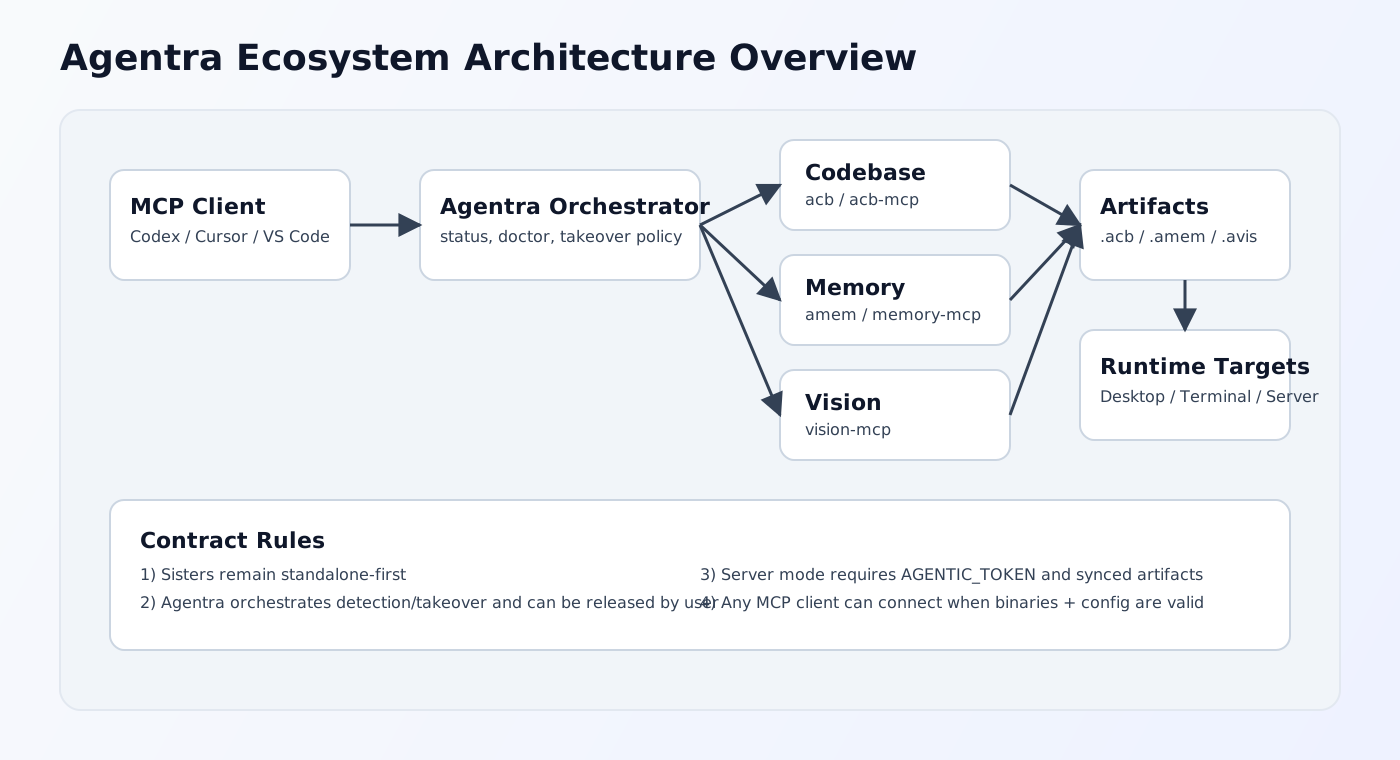
The overview flow is:
- MCP client requests go through
agentra. agentracoordinates sister runtimes (acb-mcp,agentic-memory-mcp,agentic-vision-mcp,agentic-identity-mcp,agentic-time-mcp,agentic-contract-mcp,agentic-comm-mcp,agentic-planning-mcp,acog-mcp,agentic-reality-mcp).- Sister runtimes produce and consume artifacts (
.acb,.amem,.avis,.aid,.atime,.acon,.acomm,.aplan,.acog,.areal). - Runtime targets (desktop, terminal, server) execute under one contract.
Local runtime flowchart (desktop and terminal)
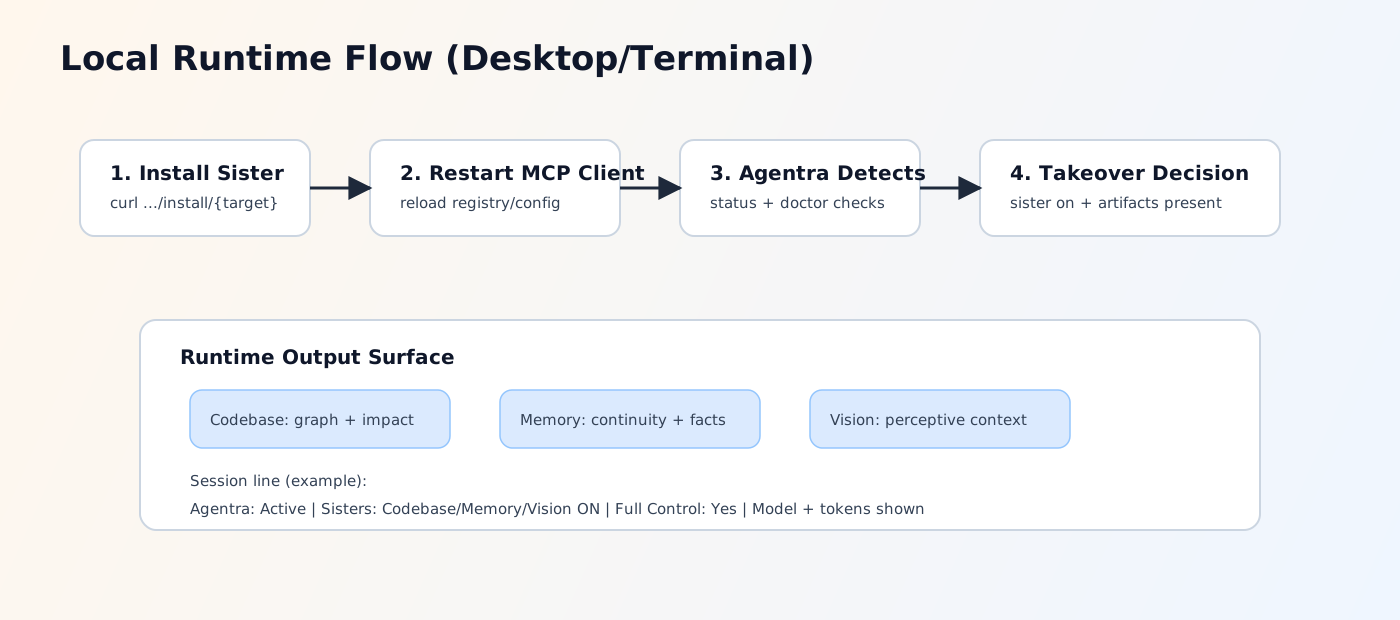
Local runtime sequence:
- Install one or more sisters.
- Restart the MCP client so it reloads config.
agentradetects binaries and artifact availability.- Takeover policy applies (auto/prompt/manual or explicit control toggles).
Server handoff flowchart (auth + artifact sync)
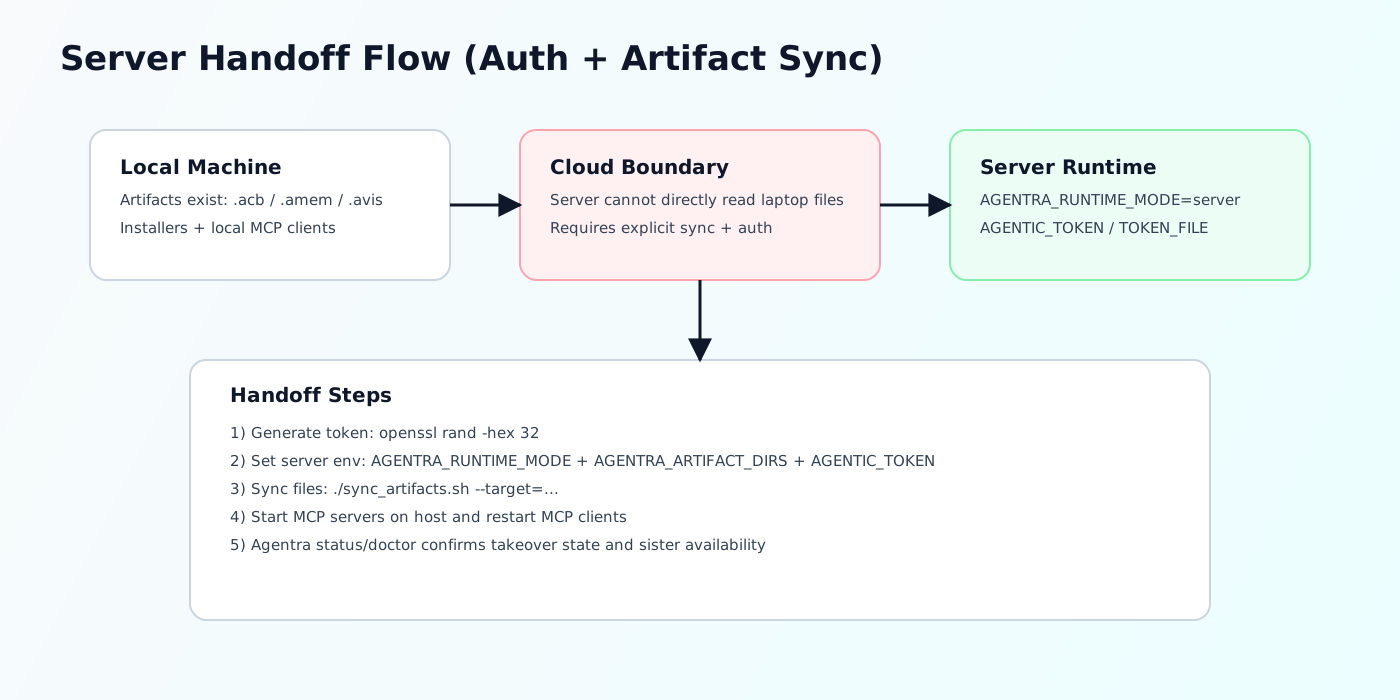
Server mode adds two non-optional requirements:
- Explicit authentication (
AGENTIC_TOKENorAGENTIC_TOKEN_FILE). - Artifact sync from local machine to server-accessible directories.
Layer model
- Workspace orchestrator (
agentra): detection, takeover state, doctor/preflight, backup and restore. - Sister runtimes:
acb-mcp,agentic-memory-mcp,agentic-vision-mcp,agentic-identity-mcp,agentic-time-mcp,agentic-contract-mcp,agentic-comm-mcp,agentic-planning-mcp,acog-mcp, andagentic-reality-mcpexpose MCP tools. - Artifacts:
.acb(code graph),.amem(memory graph),.avis(visual memory),.aid(identity anchor),.atime(temporal engine),.acon(governance contract),.acomm(communication),.aplan(planning),.acog(cognition),.areal(reality). - MCP clients: any compliant desktop, terminal, or server MCP client.
Runtime modes
- Desktop and terminal: local artifacts with local MCP servers.
- Server: authenticated MCP with synced artifacts. Server runtimes cannot directly read laptop-local files.
Control model
- Auto-detection can activate takeover when sisters or artifacts are present.
- Users can release and re-enable control without uninstalling sisters.
- Per-sister enable/disable remains non-destructive and runtime-safe.
Canonical guarantees
- Each sister remains independently installable.
- No hard runtime dependency between sisters.
- Documentation pages are generated from canonical source docs.